
The seat was a brilliant proxy for value for about twenty years. More people using the software meant more value delivered, so charging per person was fair, simple and easy to forecast.
Then software started doing the work instead of helping a person do it, and the proxy broke. If an agent handles the tickets, how many seats is that?
The Numbers Behind the Shift
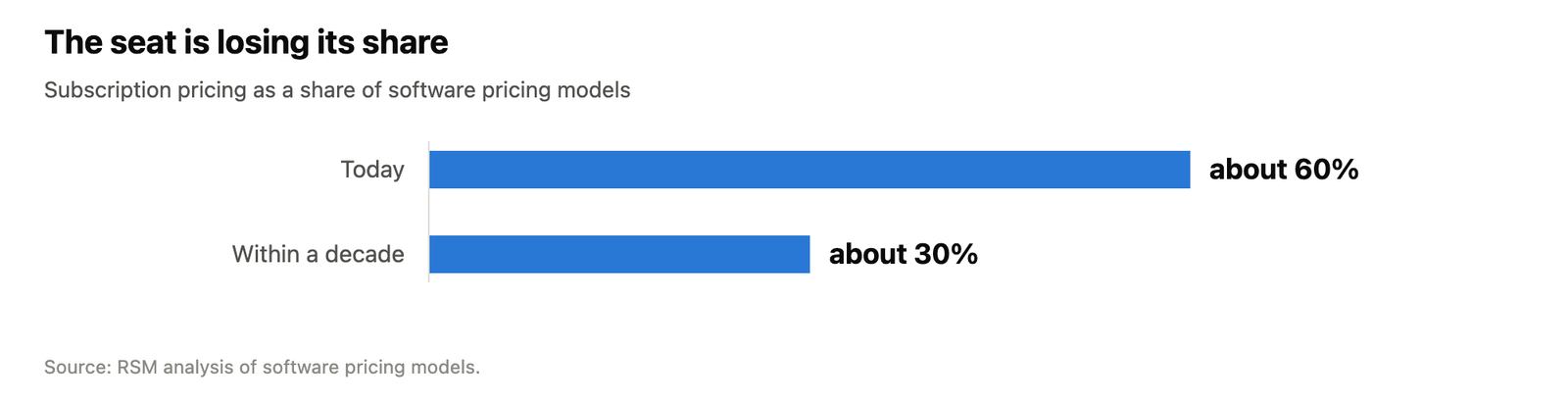
Gartner expects at least 40% of enterprise SaaS spend to move to usage, agent or outcome-based models by 2030, with seat-based revenue share declining. Analysis from RSM suggests subscription pricing could fall from around 60% of software pricing models toward 30% over the next decade.
Forecasts also point to a majority of businesses preferring usage-based pricing over per-seat arrangements. That is not a gradual drift, it is a repricing of the whole category.
The Four Models Replacing the Seat
| Model | You pay for | Works when | Breaks when |
|---|---|---|---|
| Usage | Volume consumed | Consumption tracks value | Usage is lumpy or seasonal |
| Outcome | A completed result | The result is measurable | Attribution is arguable |
| Agent or workflow | An automated worker | Work replaces a role | Agents vary wildly in capability |
| Hybrid platform plus usage | Access, then consumption | Costs are partly fixed | Nobody can forecast the bill |
Hybrid is winning in practice, because it gives the vendor predictable revenue and the buyer a floor they can budget. Pure outcome pricing sounds cleanest and is the hardest to operate.
If You Sell Software
The instrumentation is the project, not the pricing page. You cannot bill for outcomes you do not measure, and most products were never built to count them.
Start by defining an outcome precisely enough to survive a dispute. Intercom did this well with Fin, where one resolution equals one outcome per conversation regardless of how many messages it takes. That definition is doing enormous work. Ambiguity here becomes a monthly argument with every customer.
Then decide what happens when the AI fails. Charging for failed attempts destroys trust faster than any price increase.
If You Buy Software
Your next renewal will look different, and possibly worse.
- Model your peak month, not your average. Consumption pricing punishes seasonality, and vendors rarely volunteer this.
- Negotiate a ceiling. A cap costs the vendor little and protects you from a surprise quarter.
- Pin down the definition. What exactly counts as a resolution, an action, a workflow? Get it in the contract.
- Ask what happens on failure. Are you billed for attempts that did not work?
- Watch the seat reduction trap. Cutting seats while consumption rises can leave you paying more for less.
The Uncomfortable Middle
Here is the part vendors dislike discussing. If your product genuinely automates work, your revenue per customer should fall as you get better at it, unless you capture some of the saving.
That is why outcome pricing is spreading. It is the only model where improving the product does not shrink the invoice. Vendors clinging to seats while shipping automation are quietly competing with themselves.
Conclusion
If you sell, start instrumenting outcomes now, define them tightly, and expect the transition to take longer than the pricing page redesign. If you buy, model your worst month, negotiate a ceiling, and get the definition of a billable outcome in writing. The seat is not disappearing tomorrow, but it stopped being the default, and defaults change slowly right up until they change all at once.
Frequently Asked Questions
Is usage pricing always cheaper for buyers?
No. It is cheaper when usage is low and considerably more expensive at peak. The average customer usually pays about the same and simply feels the variance more.
How do we price an AI agent that replaces a role?
Anchor to the cost of the role rather than to the cost of the software it replaces. That is where the value comparison actually happens in the buyer mind.
Should small vendors move now?
Move the AI features first and keep the core on seats. A full transition on a small revenue base is a risky way to discover your outcome definition was wrong.