
Every AI feature ships to the cloud by default, because that is where the capable models live. For a growing share of workloads, that default is now the wrong one.
The question is not whether edge inference is better. It is which of your workloads cannot tolerate a round trip.
The Four Reasons to Move to the Device
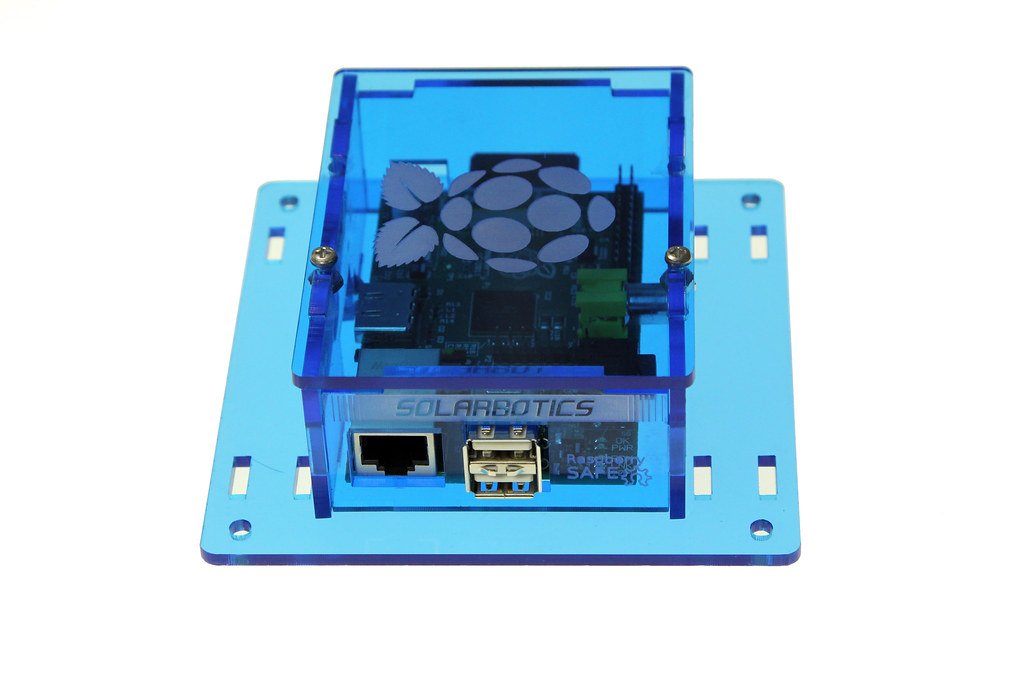
- Latency that is part of the product. Anything interacting with the physical world, from robotics to live audio, cannot wait on a network hop. This is why on-device inference drives so much custom silicon in robotics.
- Data that must not leave. When regulation or contract forbids sending data anywhere, the decision is made for you regardless of capability.
- Offline operation. Field work, vehicles, factory floors and anywhere the connection is unreliable.
- Unit economics at scale. Millions of small inferences on hardware you already ship can be dramatically cheaper than the same volume through an API.
What You Give Up
| Constraint | Consequence |
|---|---|
| Model size | Meaningfully weaker on reasoning and code |
| Update cadence | Shipping a new model means shipping a release |
| Observability | Harder to see what happened on someone device |
| Hardware variance | Your slowest supported device sets the experience |
| Battery and thermal | Sustained inference costs power and generates heat |
Model capability is the honest trade. Small models are noticeably weaker at reasoning, coding and instruction following. For classification, extraction and summarising a known format, that gap is often irrelevant.
The Hybrid Pattern That Wins
Almost nobody should be purely one or the other. Run the fast, narrow, high-volume work on the device and escalate to a hosted model when the local one is uncertain or the task genuinely needs depth.
Two design rules make this work. First, decide escalation on confidence rather than on task type, since the local model often handles a supposedly hard case perfectly well. Second, make escalation invisible to the user, because a feature that behaves differently offline teaches people not to trust it.
The Update Problem Nobody Plans For
Cloud models improve continuously. Device models improve when users install an update, which some of them never do.
That means supporting multiple model versions in the field simultaneously, and it means a bug in a shipped model has a much longer tail than one in a hosted service. Version your on-device model explicitly, report the version in telemetry, and design a path to disable a specific version remotely if you have to.
Conclusion
Move inference to the device when latency is part of the product, when data legally cannot leave, when the feature must work offline, or when volume makes API costs absurd. Keep hosted models for reasoning, ambiguity and anything you need to improve weekly. Build the hybrid, escalate on confidence rather than category, and version your device models properly before you ship the first one.
Frequently Asked Questions
How small can a useful model be?
Small enough to surprise you for narrow tasks. The question is not parameter count, it is whether it clears your accuracy floor on your own test set.
Does edge AI mean better privacy automatically?
It removes one risk, not all of them. Data still lands on a device that can be lost, and telemetry can leak what you thought you kept local.
What about running models on our own servers instead?
That is a middle option worth considering: better capability than a phone, and data never leaves your environment. It just does not solve latency for anything that must respond in milliseconds locally.